
How to Recognise a Genuine Panama Hat
How a genuine Panama hat is made
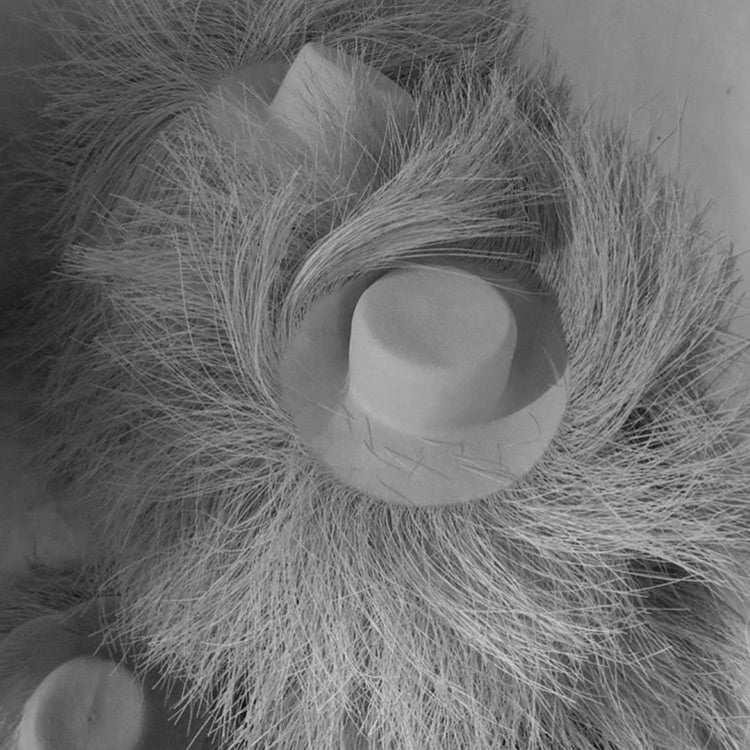
Handcrafted entirely by skilled artisans from Ecuador, the art of hand weaving Panama hats follows traditional methods passed down through generations. Typically performed in the warm ambiance of their homes, these craftsmen meticulously weave each hat, preserving a centuries-old tradition. Recognised as a UNESCO Intangible Cultural Heritage on 5 December 2012, this art form faces the threat of extinction. Here, Marchesi di Montecristi — the UK's leading Panama hat specialist and British Fashion Council member — explains why genuine Panama hats are not only unique but among the rarest luxury accessories in the world.
Tap here to watch the full video of the making process


How to recognise a genuine Panama hat
A genuine Panama hat must be handwoven in Ecuador from toquilla straw — the fibres of the Carludovica palmata plant, sourced exclusively from Ecuador's coastal regions. The straw is harvested during the final quarter of the moon phase to ensure maximum flexibility and durability. No chemicals are used at any stage of production.
Despite their name, Panama hats have always been made in Ecuador, not Panama. The name derives from the Panama Canal, through which the hats were exported to world markets in the early twentieth century.
What determines the price of a genuine Panama hat?
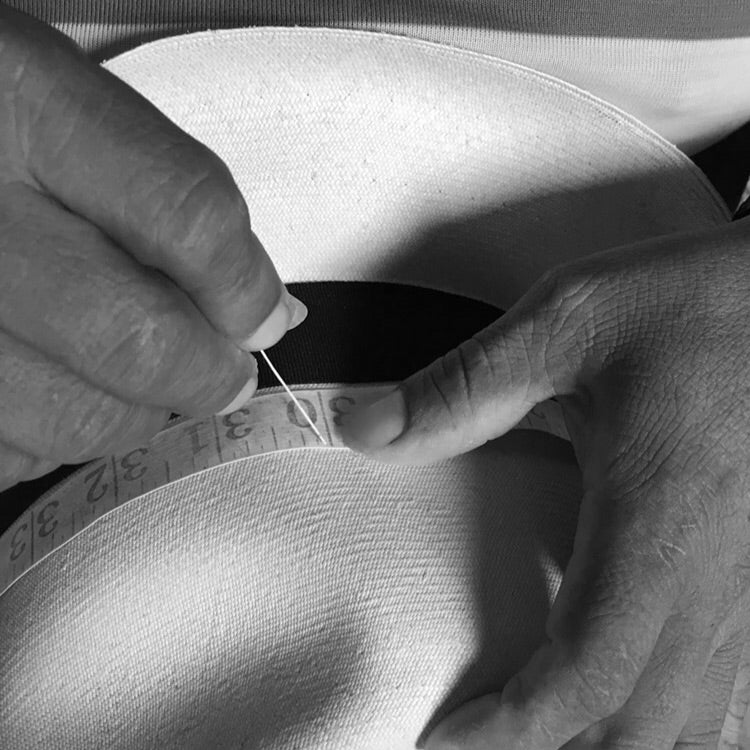
Quality is measured in WPI — Weaves Per Inch. The finer the weave, the higher the WPI count, the longer the hat took to make, and the greater its value. Marchesi di Montecristi grades their collection from Fino grade (WPI 8–10) through to Ultrafino grade (WPI 32–42) — museum quality, woven over several months by the most skilled artisans in Montecristi, Ecuador. Only the most expert weavers can produce the finest grades, which require magnification to assess accurately.
How to identify a fake Panama hat
Some dealers market hats as "Genuine Panama Hats" despite these being manufactured in Colombia, Peru, Mexico, or China using alternative materials — most commonly Iraca, Tetera, or Enea straw. These materials produce significantly lower quality and durability than authentic toquilla straw from Ecuador. The traditional Ecuadorian process strictly prohibits the use of chemicals at any stage.
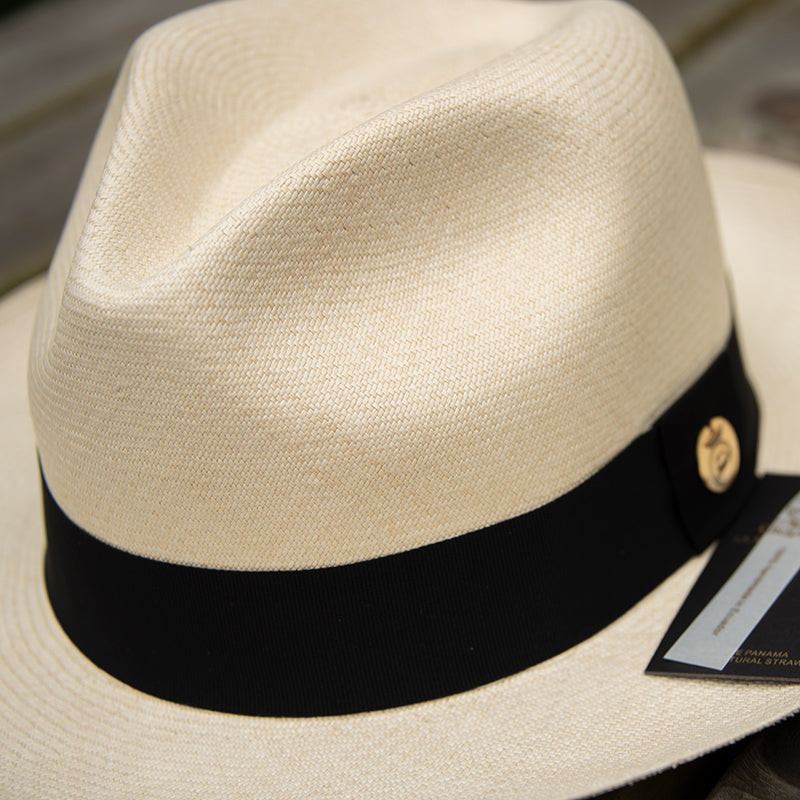
A genuine Panama hat is distinguished by a flawlessly uniform weave, light colour, light weight, and breathability. The edges must be finished by hand with the same toquilla straw — avoid hats whose edges have been machine-sewn (bound edge) or glued (under-welt). A quality Panama hat should also be rollable without cracking.
The weaving process: how a Panama hat is constructed
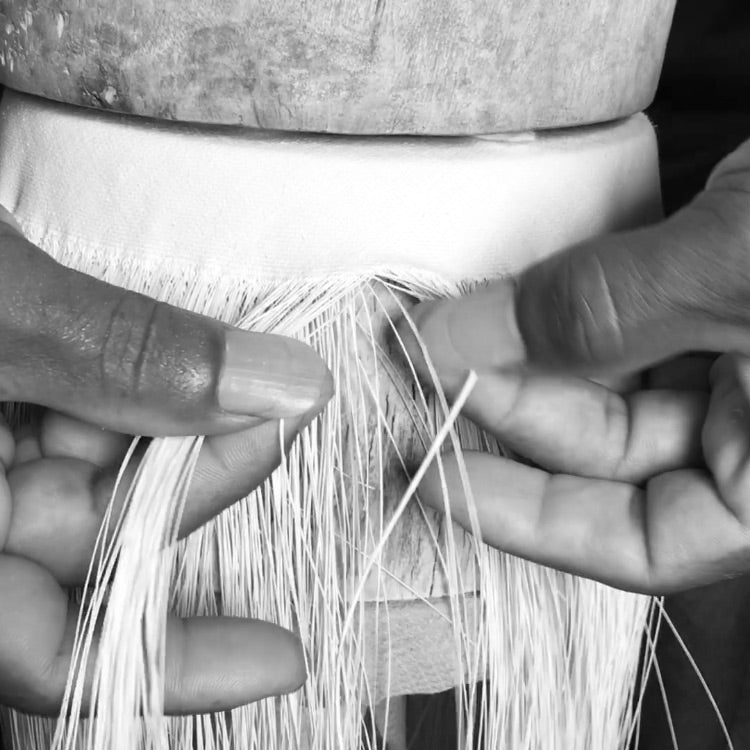
Weaving begins at the crown with a small number of toquilla straw fibres, gradually adding more until the base reaches a width of 5 to 10 centimetres. The hat body is shaped around a wooden block mould, working from the brim upward to a height of 7 to 15 centimetres.
The brim is completed using the remate — a tying-off technique exclusive to expert Ecuadorian weavers. Also known as "back weaving," it involves turning the straw back toward the crown and weaving it into a band around the outer edge of the brim. This technique is a reliable indicator of a hat's authenticity.
Finishing: azocada, compostura, and blocking
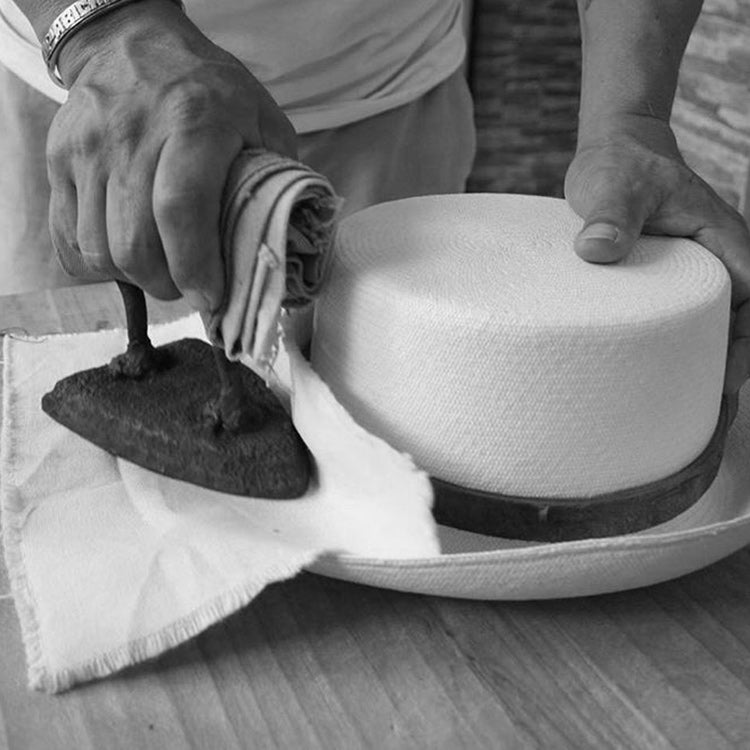
Once the brim is complete, the tied-off fibres are tightened in a stage known as the azocada — traditionally performed by skilled women artisans — followed by precise clipping of excess fibres.
The hat then undergoes washing and sun drying. Once it assumes a bell shape, craftsmen restore it to its correct form in a stage called compostura — reshaping by hand using precision and strength.
Finally, every Marchesi di Montecristi hat is blocked and finished to the highest standards in our United Kingdom warehouse. Each hat receives a soft, breathable cotton sweatband and a silk protective crown patch for lasting comfort and durability.
Performed entirely by hand using heritage techniques
No machinery is involved at any stage of a genuine Panama hat's production. The straw processing method is a further quality indicator — Montecristi hats are produced without chemicals throughout, a requirement that distinguishes them from lower-grade competitors. UNESCO recognised toquilla straw hat weaving as a world Intangible Cultural Heritage on 5 December 2012.
Additional quality checks when buying a Panama hat: confirm the hat is rollable without cracking; check the general shape is clean and symmetrical; and verify that all edges are finished by hand with the same straw. Machine-sewn or glued edges are a sign of lower quality or inauthenticity.
Marchesi di Montecristi quality guarantee
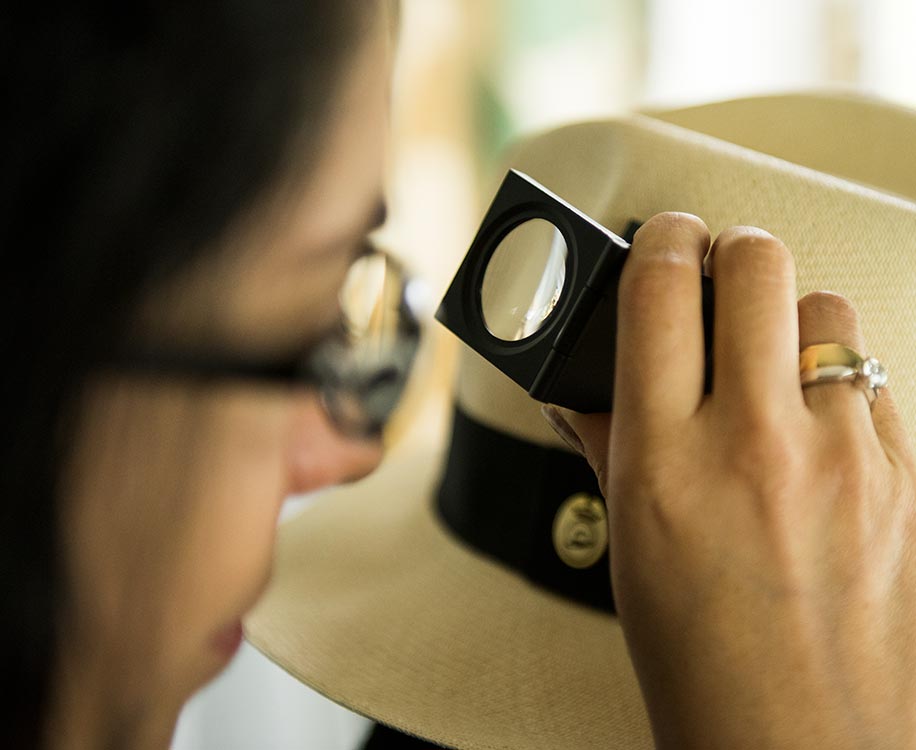
At Marchesi di Montecristi, every hat is personally inspected and selected in Ecuador by our specialist team. For Extrafino and higher grades, magnifying glasses are used to accurately assess WPI count, as the fibres are too fine to count with the naked eye. Weave uniformity and colour consistency are evaluated for every hat.
The exponential relationship between fineness and price is important to understand: as straw width is halved, weaving work increases by a factor of four. A hat twice as fine as another takes four times longer to complete. This is why a hat that appears only marginally finer may carry a significantly higher price — the incremental increase in WPI, multiplied across thousands of weave intersections, represents many additional weeks of skilled hand work.
In summary, the five factors that determine the quality and price of a genuine Panama hat are: fineness of weave (WPI), quality and uniformity of the weave, colour of the straw, hat shaping, and origin of the hat. Of these, WPI fineness is the most important single determinant.


Montecristi vs Cuenca: what is the difference?
Both Montecristi and Cuenca are regions in Ecuador producing genuine handwoven Panama hats using toquilla straw. The key technical difference is the weaving method: Montecristi hats are woven using double straw, while Cuenca hats use single straw. The double-straw technique requires more time and produces greater structural durability over the life of the hat. Montecristi hats are widely regarded as the finest in the world.
Cuenca hats are genuine and of excellent quality, provided they share the core characteristics above — handwoven from toquilla straw in Ecuador, without chemicals, with hand-finished edges.
Learn more about the weave differences between Montecristi and Cuenca hats
